Blog

Fire Safety Signs and Symbols: Meanings, Types, and UK Compliance

by
Mark McShane
November 24, 2025
13 mins

Table of Contents

Fire safety signs and symbols serve as critical communication tools that can mean the difference between life and death during an emergency. These visual guides use a universal colour-coding system to provide instant, clear directions when seconds count most. Every building occupant should understand these signs, as they may need to follow them during the most stressful moments of their lives.

Fire safety signs use a universal colour and shape code where green signs show escape routes and safety equipment, red signs identify firefighting equipment or prohibit dangerous actions, blue signs command mandatory safety actions, and yellow signs warn of specific hazards. This standardised system ensures that anyone can understand the signs regardless of their language or background, making buildings safer for everyone.

Understanding these signs is not just helpful—it's legally required in UK workplaces. Building owners must display proper signage to comply with safety regulations, whilst occupants benefit from knowing how to read these life-saving symbols. The colour-coded system removes guesswork from emergency situations and helps people make quick, informed decisions when evacuation or action is necessary.

Key Takeaways

  • Fire safety signs use four main colours with specific meanings: green for safety routes, red for equipment or prohibitions, blue for mandatory actions, and yellow for warnings
  • These signs are legally required in UK buildings and form part of essential fire safety strategies that protect lives during emergencies
  • Understanding fire safety signage helps building occupants respond quickly and correctly during fire emergencies when every second counts

What Are Fire Safety Signs and Symbols?

Fire safety signs and symbols are visual communication tools that provide critical information during emergencies and normal building use. They use standardised colours, shapes, and pictograms to guide people to safety and indicate the location of firefighting equipment.

Definition and Purpose

Fire safety signs are visual cues that provide important information about fire safety measures, fire exits, and the location of fire-fighting equipment. These signs serve as essential communication tools during fire emergencies.

The primary purpose is to help people navigate buildings safely during emergencies. Fire safety signage also identifies where firefighting equipment is located throughout a building.

These signs work effectively because they are designed to be easily recognisable and understood, even in high-stress situations. This makes them valuable during actual fire emergencies when quick decisions are needed.

Fire safety symbols complement written instructions by providing instant visual recognition. They help overcome language barriers and reduce confusion during emergencies.

Buildings use fire signage to mark escape routes, assembly points, and emergency equipment locations. This creates a comprehensive safety system that guides occupants from danger to safety.

Key Visual Elements

Fire safety signs use a universal colour and shape code to give instructions for your protection. Each colour carries specific meaning that people can quickly understand.

Red signs indicate fire equipment locations and emergency actions. These include fire extinguisher signs, fire alarm point signs, and fire blanket signage.

Green signs show safe conditions and escape routes. They mark emergency exits, evacuation routes, and first aid equipment locations.

The shape of fire safety signage also carries meaning:

  • Square or rectangular shapes typically contain equipment location information
  • Directional arrows guide people toward exits and safety areas
  • Circular shapes often indicate mandatory actions or prohibitions

White symbols on coloured backgrounds ensure maximum visibility in various lighting conditions. This contrast helps people spot important signs quickly during emergencies.

Bold, simple pictograms replace complex written instructions. These symbols work effectively regardless of the viewer's reading ability or native language.

Universal Symbol Standards

Fire safety symbols follow international standards to ensure consistency across different countries and buildings. These universally recognised symbols, colors, and shapes guide people to safety.

The International Organisation for Standardisation (ISO) sets global standards for fire safety signage. These standards ensure that a fire exit sign looks the same whether someone is in London, New York, or Tokyo.

Common universal symbols include:

  • Running person with arrow for emergency exits
  • Flame symbol for fire equipment
  • Telephone symbol for emergency communication points
  • Assembly point symbol for evacuation gathering areas

UK regulations require buildings to follow these international symbol standards. This consistency helps visitors and new occupants understand safety information immediately.

Building managers must use international symbols for fire safety signs to ensure that individuals from different backgrounds can understand and follow the instructions. This approach improves safety for everyone in the building.

These standardised symbols reduce confusion during emergencies. People can quickly identify what each sign means without needing to read detailed text instructions.

Types of Fire Safety Signs

Fire safety signs fall into three main categories that use specific colours and shapes to communicate different messages. Each type serves a distinct purpose in protecting building occupants during emergencies.

Safe Condition Signs

Safe condition safety symbol signs

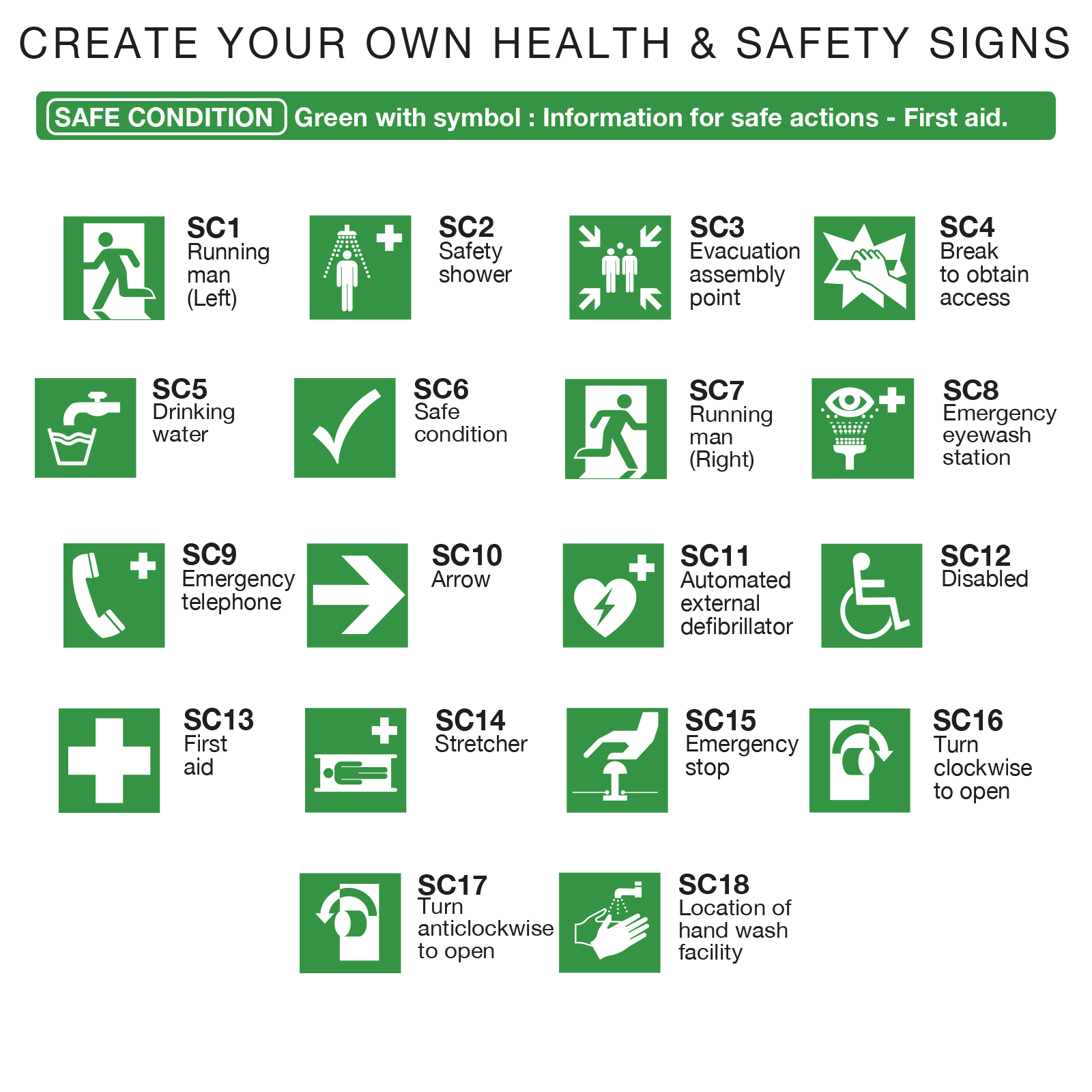
Safe condition signs use a green background with white text or symbols. These fire safety signs guide people to safety during emergencies.

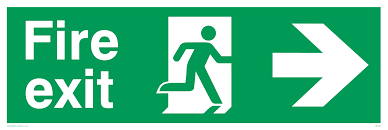
Fire exit signs are the most common type of safe condition sign. They feature the universally recognised "running man" pictogram with directional arrows. These signs must be positioned above doors and along escape routes.

The signs help people locate the nearest exit quickly during an emergency. They remain visible even in low light conditions due to their bright green colour.

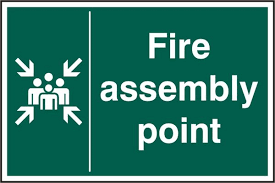
Assembly point signs mark designated areas where people gather after evacuation. These signs show where evacuees should meet once they leave the building safely.

Other safe condition signs include:

  • First aid stations
  • Emergency telephone locations
  • Safe refuge areas

All safe condition signs follow the same green and white colour scheme. This consistency helps people recognise them instantly during stressful situations.

Mandatory Signs

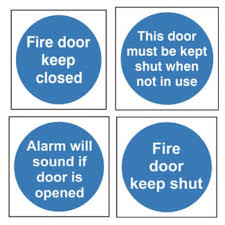
Mandatory signs appear as blue circles with white text or symbols. These fire safety signs provide clear instructions that people must follow to ensure safety.

Fire door signs are essential mandatory signs in most buildings. Common examples include "Fire Door - Keep Shut" and "Fire Door - Keep Clear". These signs ensure fire doors function properly to prevent smoke and flame spread.

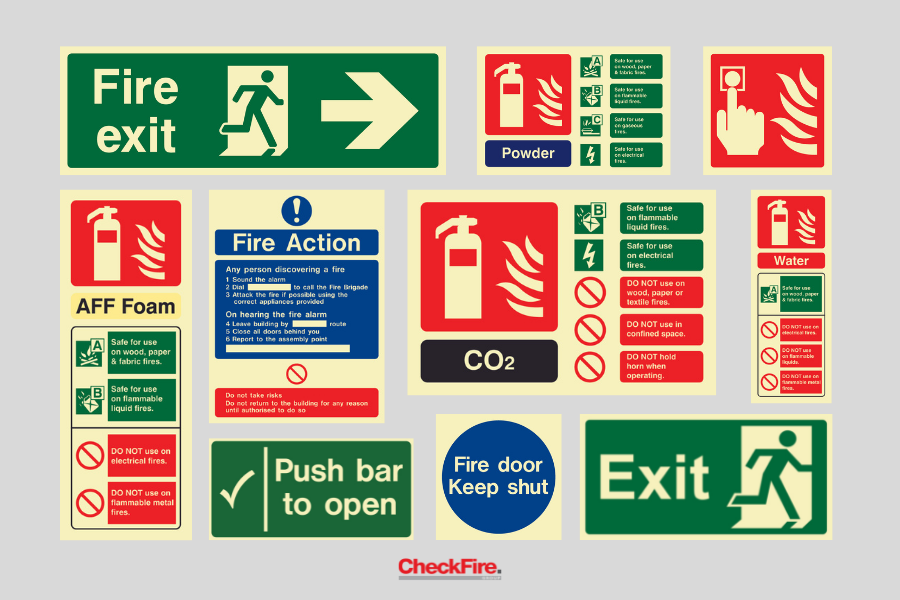
Fire action signs outline step-by-step emergency procedures. They typically include instructions such as:

  • Sound the alarm
  • Call the fire brigade
  • Do not use lifts
  • Proceed to assembly point

Fire action signs often combine blue, red, and green elements. Each colour emphasises different types of actions and warnings within the same sign.

Other mandatory signs include instructions for using fire equipment correctly. These might specify which type of extinguisher to use or how to operate alarm systems.

Prohibition Signs

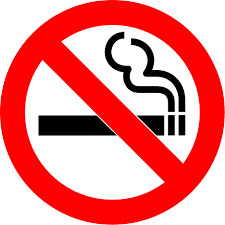
Prohibition signs feature circular designs with red borders, diagonal slashes, and white backgrounds. These signs communicate actions that are strictly forbidden in specific areas.

No smoking signs are common prohibition signs that reduce fire risks. They prevent people from smoking in areas where combustible materials are present or stored.

No naked flames signs warn against activities like lighting matches or using open flames. These signs are particularly important in areas containing flammable substances or gases.

Other prohibition signs include:

  • No mobile phones (in certain industrial areas)
  • No unauthorised personnel
  • No hot work without permit

The red diagonal slash creates an immediate visual impact. People can understand these signs quickly, even from a distance or in poor lighting conditions.

Prohibition signs work alongside other fire safety measures. They help prevent situations that could lead to fires or interfere with emergency procedures.

Warning and Hazard Signage

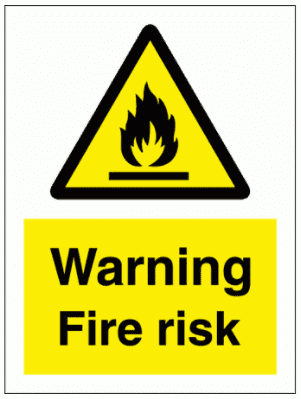
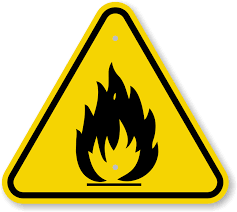
Yellow warning signs alert people to potential fire risks and dangerous conditions. These triangular signs with black symbols help prevent accidents by making hazards visible before they cause harm.

Warning Signs

Yellow warning signs use a triangular shape with black symbols on a bright yellow background. This colour combination grabs attention quickly and warns people about specific dangers.

Common yellow warning signs include:

  • Flammable materials present
  • Risk of fire in storage areas
  • Explosive atmosphere warnings
  • High temperature surfaces
  • Electrical fire hazards

These signs must be placed where people can see them clearly. They work best when positioned at eye level near the actual hazard.

Warning signs help workers and visitors spot dangers before entering risky areas. They give people time to take proper safety steps or use protective equipment.

Fire Hazard Symbols

Fire hazard symbols show specific types of fire risks using simple pictures. The most common symbol is a black flame on a yellow triangular background.

Key fire hazard symbols include:

  • Flame symbol: Shows general fire risk
  • Explosion symbol: Warns of blast danger
  • Hot surface symbol: Indicates burning hazard
  • No naked flames symbol: Prohibits open fires

Fire safety symbols help people understand risks even without reading text. This makes them useful in workplaces with workers who speak different languages.

The symbols follow international standards so they look the same everywhere. This means people can recognise them no matter where they work or visit.

Fire Safety Equipment Signage

Fire safety equipment signs use red backgrounds with white symbols to identify crucial firefighting tools and emergency devices. These signs help people quickly locate fire extinguishers, alarm points, and other essential equipment during emergencies.

Fire Extinguisher Signs

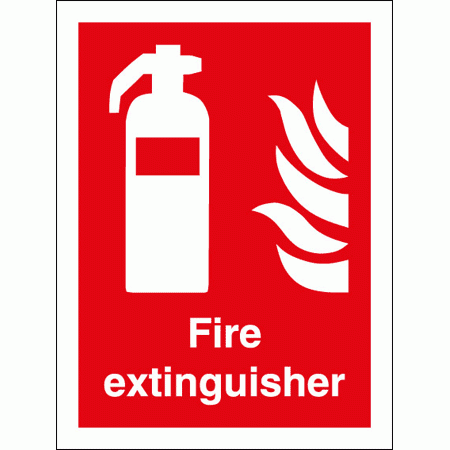
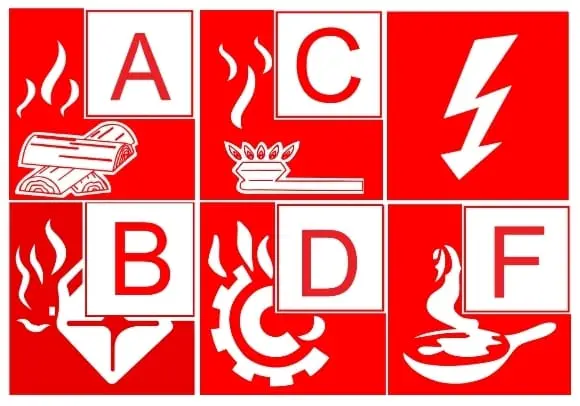
Fire extinguisher signs feature a red square or rectangular background with white symbols showing the extinguisher type. The signs display clear pictograms indicating which fires the extinguisher can tackle.

Most signs include the extinguisher classification:

  • Class A: Wood, paper, textiles
  • Class B: Flammable liquids
  • Class C: Flammable gases
  • Class D: Metals
  • Class F: Cooking oils

The signs must be positioned directly above or adjacent to each fire extinguisher. They should remain visible from at least 2 metres away in normal lighting conditions.

Location signs for fire extinguishers often include directional arrows when the equipment is not immediately visible. Some buildings use supplementary signs at corridor intersections to guide people to the nearest extinguisher location.

Fire Alarm Signage

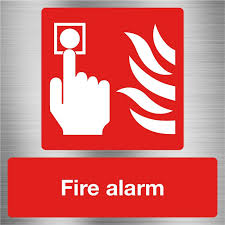
Fire alarm signs mark manual call points where people can activate the fire alarm system. These signs display a red background with a white bell symbol or hand pressing a button.

The standard wording reads "Fire Alarm" or "Break Glass" depending on the activation method. Some signs include instructions like "In case of fire break glass" below the main symbol.

Call point signs must be positioned immediately above each manual alarm device. They help people identify alarm activation points quickly during stressful emergency situations.

Additional signage may indicate automatic detection zones or provide instructions for alarm testing procedures. These supplementary signs ensure building occupants understand the complete fire detection system.

Fire Equipment Signs

Fire equipment signs identify various firefighting tools beyond extinguishers and alarms. Fire equipment signage includes markers for fire blankets, hose reels, and emergency stop controls.

Fire blanket signs show a red background with a white blanket symbol. These typically appear in kitchens and areas with potential cooking fires.

Fire hose signs display a coiled hose symbol on red backgrounds. They mark locations of fire hose reels and hydrant points throughout buildings.

Emergency stop signs feature red backgrounds with stop symbols. These mark controls for shutting down equipment during fire emergencies.

Equipment Type Symbol Typical Location
Fire Blanket White blanket on red Kitchen areas
Fire Hose Coiled hose on red Corridors, stairwells
Emergency Stop Stop symbol on red Near machinery

Each sign must be clearly visible and unobstructed to ensure quick equipment access during emergencies.

Emergency Routes and Assembly Points

Emergency routes and assembly points guide people from their current location through safe escape paths to ultimate safety areas. These green signs with white symbols show clear pathways during emergencies and designate where people should gather after evacuation.

Fire Exit and Escape Route Signage

Fire exit signs use green backgrounds with white symbols to mark safe escape routes throughout buildings. The standard running person symbol shows the direction people should travel during an emergency.

These signs must be placed at key decision points like corridor junctions and stairwells. They guide occupants along the safest path to building exits.

Fire escape signs guide people from wherever they are in a building through places of relative safety to ultimate safety areas. The signs create a clear visual path that remains visible even in low light conditions.

Exit route signs often include arrows pointing towards the nearest safe exit. Some signs combine text and symbols to show both "Fire Exit" and directional information.

Buildings must maintain clear sight lines to these signs at all times. Furniture, displays, or equipment cannot block the view of emergency route signage.

Assembly Point Signs

Assembly point signs mark the designated gathering areas where people must go after evacuating a building. These green rectangular signs typically show a group of people or use clear text stating "Assembly Point."

The signs help emergency services account for all building occupants during an incident. They prevent people from wandering away or re-entering dangerous areas.

Assembly points should be located away from the building at a safe distance. The signs must be clearly visible from multiple exit points so people know where to gather.

Assembly point signs post-evacuation indicate where occupants should meet after leaving the building. Some signs include additional information like building names or zone numbers for large facilities.

Weather-resistant materials ensure these outdoor signs remain readable in all conditions.

Emergency Exits

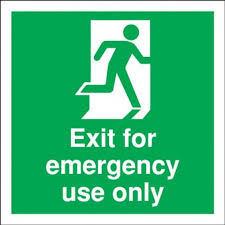
Emergency exit signs mark the final doors that lead people out of buildings to safety. These signs feature the standard green background with white symbols showing a person moving through a doorway.

Emergency exits and safe areas are clearly marked with green safety signs that show people exactly where to go. The signs must be illuminated or have emergency lighting to remain visible during power failures.

Exit signs often include the word "Exit" in multiple languages for international buildings. Some signs have additional features like flashing lights or audible signals for people with hearing or vision impairments.

These signs must be mounted above or beside actual exit doors. False or misleading exit signs create serious safety hazards during real emergencies.

Regular maintenance ensures exit signs remain functional when needed most. Battery backup systems keep illuminated signs working during electrical failures.

Legal Requirements and Compliance

UK businesses must follow three main regulations for fire safety signage. Fire safety signage is a legal requirement under the Regulatory Reform (Fire Safety) Order 2005, with additional standards set by the Health and Safety regulations and British Standards.

The Regulatory Reform (Fire Safety) Order 2005

The Regulatory Reform (Fire Safety) Order 2005 serves as the primary legislation governing fire safety signage in the UK. Article 14 specifically addresses emergency routes and exits, making fire safety signs mandatory for businesses.

This regulation places clear responsibilities on property owners and employers. They must provide adequate signage in necessary areas throughout their premises. The legislation requires signs to meet visibility and durability standards.

Key requirements include:

  • Provision of signs in appropriate locations
  • Ensuring signs remain visible and understandable
  • Effective placement matching the sign's purpose
  • Conformance to recognised safety sign standards

Non-compliance carries serious penalties. Minor breaches can result in fines up to £5,000, whilst severe violations may lead to unlimited fines or imprisonment.

Health and Safety (Safety Signs and Signals) Regulations 1996

The Health and Safety (Safety Signs and Signals) Regulations 1996 work alongside the Fire Safety Order. These regulations ensure uniformity in fire safety sign design across all UK workplaces.

The regulations establish consistent colours, symbols, and formats. This standardisation means people can quickly understand fire safety signs regardless of location. Red backgrounds indicate fire equipment locations, whilst green shows escape routes.

Standard colour meanings:

  • Red: Fire equipment and prohibition signs
  • Green: Safe conditions and emergency exits
  • Blue: Mandatory actions like keeping fire doors closed
  • Yellow: Warnings about fire hazards

These regulations ensure signs are clear and understandable when used. They complement the Fire Safety Order by providing the technical specifications that make compliance possible.

British Standards: BS 5499

BS 5499 provides detailed technical guidance for fire safety sign design, colour, and placement. The British Standards Institution developed these guidelines to support compliance with legal requirements.

The standard specifies exact dimensions, font sizes, and symbol designs. It covers photoluminescent properties for signs that must remain visible during power failures. BS 5499 also details mounting heights and viewing distances.

Technical specifications include:

  • Minimum sign sizes for different viewing distances
  • Colour values and contrast requirements
  • Symbol proportions and clarity standards
  • Durability testing for different environments

BS 5499 ensures fire safety signs meet recognised standards. Compliance with this standard helps businesses meet their legal obligations under both the Fire Safety Order and Health and Safety regulations.

Best Practices for Fire Safety Signage

Proper fire safety signage requires strategic placement at eye level and decision points, regular maintenance checks, standardised international symbols, and comprehensive training for all building occupants. These practices ensure signs remain effective during emergencies and meet UK fire safety regulations.

Visibility and Placement

Fire safety signs must be positioned where people can see them instantly during normal conditions and emergencies. The responsible person should ensure signs are mounted at eye level, typically 1.5 to 2 metres high.

Signs need clear sight lines without obstructions from furniture, equipment, or decorations. Key placement locations include corridor junctions, doorways, and stairwell entrances where people make evacuation decisions.

Critical placement areas include:

  • Above fire exit doors
  • At changes of direction along escape routes
  • Near fire equipment locations
  • At building entrances and reception areas

Fire wardens should verify that signs remain visible after office relocations or equipment changes. Poor visibility can delay evacuation and increase risks during fire emergencies.

Illuminated signs are mandatory for escape routes under British Standards. Emergency lighting systems must keep signs visible during power failures when normal lighting fails.

Maintenance and Inspection

Regular inspection ensures fire safety signs remain legible and compliant throughout their working life. The fire safety marshal should conduct monthly visual checks for damage, fading, or obstruction.

Annual detailed inspections must verify that signs meet current standards and remain properly positioned. Fire risk assessments should include signage reviews to identify maintenance needs.

Monthly inspection checklist:

  • Check for physical damage or fading
  • Verify signs remain unobstructed
  • Test illuminated sign functionality
  • Document any required repairs

Replace damaged signs immediately using certified products with UKCA markings. Photoluminescent signs require charging from ambient light to maintain their glow-in-the-dark properties effectively.

Environmental factors like sunlight, humidity, and chemicals can degrade sign materials over time. Industrial premises may need more frequent replacements than standard office environments.

Using International Symbols

BS EN ISO 7010 symbols provide universal recognition across different languages and cultures. These standardised pictograms help visitors and international workers understand safety information instantly without text translation.

The running person symbol indicates emergency exits whilst the flame symbol identifies fire equipment locations. Red backgrounds show prohibition signs, green indicates safe conditions, and yellow triangles warn of hazards.

Standard symbol meanings:

  • Running figure: Emergency exit route
  • Flame: Fire fighting equipment
  • Assembly point: Muster location
  • Fire extinguisher: Specific extinguisher type

Avoid mixing old and new symbol standards within the same building. Consistency prevents confusion during emergencies when quick decision-making is essential for safety.

Text supplements can support symbols but should never replace standardised pictograms. Multi-language buildings benefit from symbol-based systems that work regardless of reading ability.

Training and Awareness

Fire safety training must include signage recognition for all building occupants. New employees need induction covering sign meanings, escape routes, and equipment locations within their work areas.

The fire marshal should conduct regular briefings highlighting signage changes after building modifications or renovations. Visual aids and practical exercises help reinforce learning better than verbal instructions alone.

Training programmes should cover the five main sign categories: prohibition, warning, mandatory, safe condition, and fire equipment signs. Staff must understand colour coding and shape meanings for quick recognition.

Regular fire drills test whether occupants can follow signage effectively under pressure. Fire prevention strategies include ensuring staff report damaged or missing signs immediately to maintain safety standards.

Visitor management systems should include basic fire safety information and evacuation route maps. Reception staff need training to direct visitors towards exits during emergencies using established signage systems.

Frequently Asked Questions

Fire safety signage follows specific colour codes and shapes to communicate different types of information instantly. Understanding placement requirements, mandatory symbols, and maintenance schedules helps ensure proper compliance with UK regulations.

What do the different colours and shapes signify in fire safety signage?

Fire safety sign colours follow a standardised system to convey meaning quickly during emergencies. Red signs identify fire-fighting equipment and emergency stop controls using square or rectangular shapes.

Green signs indicate safe conditions and emergency escape routes. These appear as squares or rectangles with white symbols on green backgrounds.

Blue circular signs show mandatory instructions that must be followed. Yellow triangular signs warn of fire hazards or dangerous areas requiring caution.

How are fire action signs different from fire equipment signs?

Fire action signs provide step-by-step instructions for what people should do during a fire emergency. These signs typically appear near building entrances and include procedures like raising the alarm and evacuating.

Fire equipment signs use red rectangles with white symbols to mark locations of firefighting tools. These include fire extinguishers, hose reels, and fire blankets.

Equipment signs focus on identifying where safety tools are located. Action signs explain the specific steps people must take during an emergency.

What are the requirements for the placement and visibility of fire exit signs?

Fire exit signs must be clearly visible and well-lit, even in darkness if necessary. They should be positioned at key decision points such as stairwells, doorways, and escape routes.

Signs need installation at a visible height, typically between 1.7 metres and 2 metres above floor level. Nothing should obstruct the view of these signs.

Exit route signs must create a continuous path from any point in the building to the nearest safe exit. Each sign should be visible from the previous one to maintain clear guidance.

Which symbols indicate mandatory actions in the event of a fire?

Blue circular signs with white symbols indicate mandatory actions during fire emergencies. Common examples include "Fire Door Keep Shut" signs that prevent fire spread through buildings.

"Keep Clear" signs around fire exits and control panels show areas that must remain unobstructed. These ensure quick access to emergency equipment and escape routes.

Mandatory PPE signs appear in areas where specific protective equipment is required during fire risk work. These blue signs use simple pictograms to show required safety gear.

What is the importance of graphical symbols in conveying fire safety instructions?

Graphical symbols communicate fire safety information instantly without requiring language skills or literacy. A person running through a door universally indicates an emergency exit.

Flame symbols on red backgrounds immediately identify fire-fighting equipment locations. Bell or alarm icons clearly mark manual fire alarm call points.

These visual cues work effectively under stress and low visibility conditions. Symbols overcome language barriers and help people of all backgrounds understand critical safety information quickly.

How often should fire safety signs be reviewed for compliance and effectiveness?

Fire safety signs should be reviewed annually and updated whenever building layouts change. Regular checks help identify faded, damaged, or obstructed signage that could compromise safety.

Signs need immediate attention when furniture, displays, or renovations block their visibility. Changes to fire safety plans or building use also require signage updates.

Monthly visual inspections can catch obvious problems like damaged signs or blocked views. Professional fire risk assessments determine if additional signage is needed based on current building use and layout

Learn more about fire safety

How to Stop Combustion: Fire Triangle & Extinguishing Methods

Fire Evacuation Plan: Steps, Roles & UK Safety Rules

What Does PASS Stand For? Full Guide to Every Meaning (Fire Safety, Tech & More)

Looking for a fire safety course?

Get qualified fast with our online training.

View Courses