
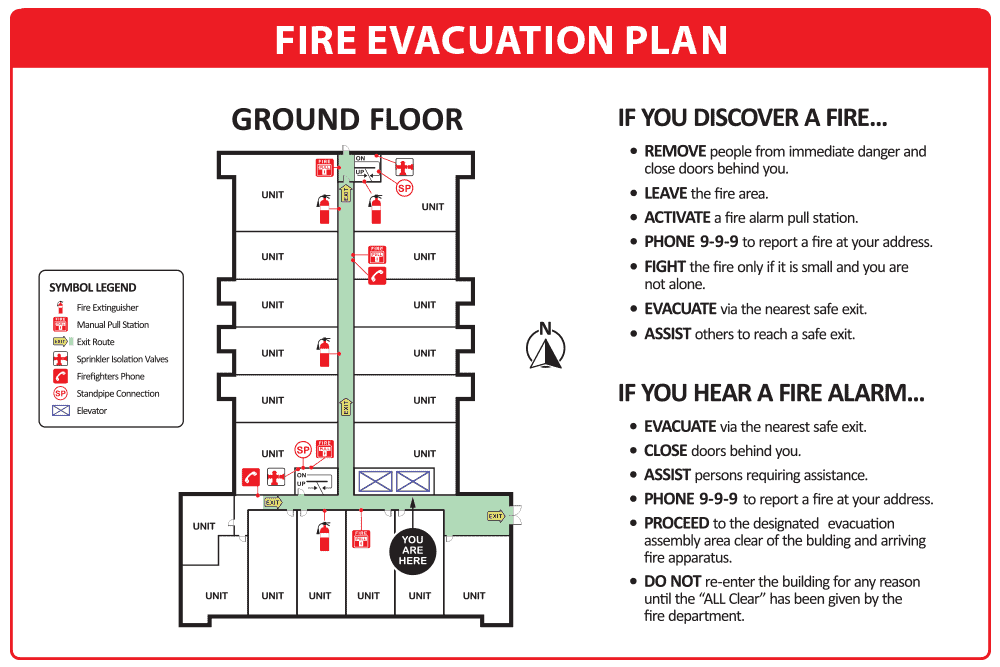
When fire breaks out in a workplace or building, every second counts. People need clear directions on where to go and how to get out safely. Without proper planning, confusion and panic can lead to serious injuries or worse.
A fire evacuation plan is a detailed document that outlines how everyone in a building should exit safely during a fire emergency, including designated escape routes, assembly points, and specific roles for staff members. This plan must comply with fire safety regulations and be tailored to each building's unique layout and risks.
Creating an effective evacuation plan involves more than just pointing to the nearest exit. It requires careful assessment of fire hazards, mapping multiple escape routes, assigning responsibilities to trained personnel, and conducting regular drills. The plan must also account for people who may need extra help during an evacuation, such as those with mobility issues or hearing impairments.
Key Takeaways
- Fire evacuation plans must identify multiple escape routes, assign specific roles to staff, and include regular training drills
- Legal compliance requires conducting fire risk assessments and creating personal emergency evacuation plans for vulnerable individuals
- Effective plans need clear signage, accessible assembly points, and coordination with emergency services to ensure everyone's safety
Looking for fire marshal training? We offer a range of online RoSPA approve courses.
What Is a Fire Evacuation Plan?
A fire evacuation plan is a written document that tells people exactly how to leave a building safely during a fire emergency. These plans protect lives by providing clear steps for escape and ensuring everyone knows what to do when seconds count.
Purpose and Importance
A fire evacuation plan outlines what will happen when a fire breaks out. It shows people how to get out of the building safely and who will manage the evacuation process.
The main purpose is to save lives. When fire strikes, people often panic or make poor decisions. A clear plan removes guesswork and confusion.
Key purposes include:
- Getting everyone out quickly and safely
- Preventing injuries during evacuation
- Meeting legal fire safety requirements
- Reducing property damage through fast response
Fire evacuation plans are legally required in most workplaces. Employers must ensure their staff know how to escape in an emergency.
The plan also helps emergency services respond faster. Firefighters can locate people more easily when they know the building's evacuation procedures.
Without a proper plan, people might use lifts instead of stairs. They could also head towards blocked exits or hide in dangerous areas.
Key Components
A fire emergency evacuation plan contains ten essential components that work together to ensure safe evacuations.
Essential elements include:
- Clear escape routes - Primary and secondary paths marked clearly
- Assembly points - Safe outdoor locations away from the building
- Fire wardens - Trained staff who guide others and check rooms
- Alarm procedures - How to raise the alert when fire is discovered
The plan must show the building layout with all exits marked. Escape routes need to stay clear and well-lit at all times.
Staff roles are clearly defined. Some people activate alarms whilst others help colleagues evacuate. Designated wardens ensure everyone leaves safely.
The plan includes procedures for calling emergency services. Staff learn to provide location details and casualty information using the LIONEL method: Location, Incident, Other services, Number of casualties, Extent of incident, Location.
Roll call procedures help account for everyone at assembly points. This ensures no one remains trapped inside the building.
Legal Requirements and Responsibilities
UK fire safety legislation creates binding legal duties for employers and building owners to implement comprehensive evacuation plans. These obligations span across multiple acts and regulations, with specific documentation requirements that must be maintained and regularly updated.
Employer and Duty Holder Obligations
The Regulatory Reform (Fire Safety) Order 2005 places primary responsibility on the "responsible person" to ensure fire safety for all building occupants. This typically includes building owners, employers, or facility managers.
Employers must conduct regular fire risk assessments to identify potential hazards and evaluate escape routes. These assessments form the foundation of all evacuation planning decisions.
Key employer duties include:
- Identifying all persons at risk during an emergency
- Establishing clear evacuation procedures for different scenarios
- Providing adequate fire safety training to all staff members
- Maintaining escape routes and emergency exits in usable condition
- Installing appropriate fire detection and alarm systems
Workplace safety regulations require employers to designate trained fire wardens or marshals. These individuals coordinate evacuations and assist colleagues during emergencies.
For buildings with five or more employees, fire risk assessments must be documented in writing. Employers cannot delegate legal responsibility, even when using external contractors for safety services.
Relevant Legislation
Multiple pieces of legislation govern fire evacuation planning in the UK. The Fire Safety Order 2005 serves as the primary framework for most non-domestic premises.
The Fire Safety Act 2021 expanded requirements to include external wall systems and flat entrance doors in residential buildings. This legislation strengthens accountability for building owners.
Fire Safety (England) Regulations 2022 introduced additional requirements for high-rise residential buildings. These include mandatory floor plans and building information sharing with fire services.
Recent developments include:
- Fire Safety (Residential Evacuation Plans) (England) Regulations 2025 for vulnerable residents
- Enhanced duties for buildings over 18 metres or seven storeys
- Requirements for Personal Emergency Evacuation Plans (PEEPs)
Health and Safety at Work Act 1974 also applies, creating general duties for employee welfare during emergencies.
Documentation and Records
Legal compliance requires maintaining comprehensive written records of all fire safety measures. Documentation must be readily available for inspection by enforcement authorities.
Essential records include:
- Written fire risk assessment (updated regularly)
- Evacuation procedures and assembly point locations
- Staff training records and competency certificates
- Fire drill logs with dates and participant details
- Equipment testing and maintenance schedules
Fire risk assessments must be reviewed whenever significant changes occur to the building, occupancy, or processes. Many organisations review assessments annually as best practice.
Emergency evacuation plans must include floor plans showing escape routes, assembly points, and fire-fighting equipment locations. These plans should be displayed prominently throughout the premises.
Training records must demonstrate that all employees receive appropriate fire safety instruction. This includes induction training for new staff and refresher sessions for existing personnel.
Documentation failures can result in enforcement notices, prosecution, and significant financial penalties for responsible persons.
Conducting a Fire Risk Assessment
A comprehensive fire risk assessment forms the foundation of any effective fire evacuation plan. This systematic process identifies potential hazards, evaluates risks to people, and requires regular updates to maintain effectiveness.
Identifying Fire Hazards
The first step involves a thorough inspection of the premises to locate anything that could start or spread a fire. Fire hazards include ignition sources and combustible materials that could create dangerous situations.
Common ignition sources include:
- Faulty electrical wiring and overloaded circuits
- Heating equipment positioned near combustible items
- Cooking appliances left unattended
- Smoking materials not properly extinguished
- Hot work activities like welding or grinding
Flammable materials to identify:
- Paper, cardboard, and packaging materials stored improperly
- Cleaning chemicals and solvents
- Furniture and soft furnishings
- Waste accumulation in storage areas
Building layout and construction materials also affect fire spread. Older buildings may have limited fire-resistant barriers. Modern structures often include better fire safety features but still require assessment.
External factors need consideration too. Nearby buildings, vehicle access for emergency services, and surrounding vegetation can all influence fire risk levels.
Evaluating Risks to Occupants
Once hazards are identified, the next step examines how these could affect people in the building. The assessment must consider the number of occupants and their typical locations throughout different times.
Key factors to evaluate:
People with mobility issues face particular challenges during evacuations. The assessment should identify who might need extra help and what support they require.
Staff training levels affect evacuation success. Buildings with well-trained fire wardens typically achieve faster, more orderly evacuations than those without designated personnel.
Emergency services access requires evaluation. Narrow streets, locked gates, or construction work could delay fire brigade arrival and affect evacuation strategies.
Reviewing and Updating Assessments
Fire risk assessments require regular review and updates to remain effective. Changes in building use, occupancy, or layout can significantly alter risk levels.
Review triggers include:
- Annual scheduled reviews as minimum requirement
- Building alterations or renovations
- Changes in business operations or occupancy levels
- After any fire incidents or near misses
- Following equipment failures or maintenance issues
Documentation plays a crucial role in maintaining assessment accuracy. Records should track when inspections occurred, what changes were made, and who conducted the review.
New fire safety regulations or industry guidance may require assessment updates. Building owners must stay informed about changing requirements that could affect their fire evacuation plans.
Feedback from fire drills often reveals assessment gaps. If evacuations take longer than expected or people struggle with escape routes, the assessment needs revision to address these practical issues.
Designing Effective Escape Routes
Effective escape routes require proper marking, accessible emergency exits, and clear pathways free from obstructions. These elements work together to ensure quick and safe evacuation during fire emergencies.
Marking and Signposting Escape Routes
Clear signage guides people along evacuation routes during high-stress situations. Emergency exit signs must use standardised symbols and colours that meet British fire safety regulations.
Signs should be illuminated and visible from all angles along the escape route. Emergency lighting where needed ensures signs remain visible during power outages.
Key signage requirements include:
- Green exit signs with white pictograms
- Directional arrows pointing towards exits
- "Fire Exit" labels on emergency doors
- Floor markings for guidance in smoke-filled conditions
Signs must be positioned at regular intervals along corridors and at decision points. They should be mounted between 2-2.5 metres above floor level for optimal visibility.
Photoluminescent signs provide backup illumination without requiring electrical power. These signs charge from ambient light and glow during darkness or power failures.
Emergency Exits and Accessibility
Emergency doors that open easily prevent bottlenecks during evacuation. Push-bar mechanisms allow doors to open with minimal force, even when people are panicking.
Fire exit doors must open in the direction of travel. They cannot be locked from the inside during occupied hours. Security systems should release automatically during fire alarms.
Accessibility features for emergency exits:
- Minimum 850mm door width for wheelchair access
- Level thresholds without raised lips
- Tactile indicators for visually impaired users
- Refuges for people with mobility needs
Special arrangements for people with mobility needs include designated helpers for wheelchair users. Evacuation chairs may be needed for multi-storey buildings.
Exit capacity must accommodate the maximum number of occupants. Each exit should handle approximately 40 people per metre of width per minute.
Maintaining Clear Passageways
Clear passageway to all escape routes prevents delays during evacuation. Corridors, stairwells, and doorways must remain free from storage, furniture, and equipment.
Regular inspections ensure escape routes stay unobstructed. Staff should report any items blocking evacuation paths immediately.
Common obstructions to avoid:
- Delivery boxes in corridors
- Cleaning equipment near exits
- Propped-open fire doors
- Extension leads across walkways
Minimum corridor widths depend on occupancy levels. Most escape routes require at least 1.05 metres width for up to 60 people.
Fire doors must remain closed unless fitted with automatic closing devices. These doors prevent smoke spread and maintain escape route integrity during fires.
Stairwells require particular attention as they often become congested during evacuation. Handrails should be secure and lighting must function reliably.
Establishing Assembly Points and Accountability
A proper fire evacuation plan requires designated assembly points where people gather after leaving the building and clear procedures for accounting for all occupants. These elements ensure everyone reaches safety and emergency responders can make informed decisions about rescue operations.
Safe Assembly Point Criteria
The location of your fire assembly point requires careful consideration of multiple safety factors. The most critical requirement is maintaining sufficient distance from the building to protect occupants from smoke, heat, and potential structural collapse.
Distance Requirements:
- Minimum 50 feet from the building
- Clear of emergency service access routes
- Away from potential debris zones
The safe assembly point must accommodate all expected occupants comfortably. Large buildings may require multiple meeting points, particularly when different exit routes lead to separate areas of the property.
Accessibility considerations include clear, unobstructed pathways for people with mobility issues. The route to the assembly point should remain accessible during emergencies, with adequate lighting and proper signage marking the way.
Additional hazards around the assembly point require assessment. Car parks present traffic risks, while areas near roads or other buildings may introduce new dangers that compromise occupant safety.
Roll Call and Headcounts
Accountability procedures begin immediately upon reaching the assembly point. Fire marshals or designated personnel conduct systematic headcounts to verify all occupants have evacuated safely.
Pre-planned accountability systems work most effectively:
Missing person protocols require immediate action. Fire marshals must report unaccounted individuals to emergency services with specific details about their last known location within the building.
Regular practice during fire drills helps identify problems with headcount procedures. These exercises reveal whether the chosen system works efficiently under pressure and highlights areas needing improvement.
Location and Communication
Clear signage throughout the building must indicate assembly point locations using consistent symbols and directional arrows. Signs should remain visible in low-light conditions and from multiple angles along evacuation routes.
Communication systems at the meeting point enable coordination with emergency services. Mobile phones provide the primary method, though backup communication options help when mobile networks become congested during large emergencies.
The assembly point location should facilitate easy communication between fire marshals and building occupants. Open areas with good acoustics allow important information to reach everyone without electronic amplification systems.
Emergency service access to the assembly point requires consideration during location selection. Paramedics, fire crews, and police need clear routes to reach evacuated personnel for medical attention or further instructions about the emergency situation.
Roles and Responsibilities During Evacuation
Clear roles and responsibilities ensure smooth evacuations and prevent confusion during emergencies. Every person in a building has specific duties that contribute to everyone's safety.
Fire Wardens and Marshals
Fire wardens serve as the backbone of any evacuation plan. They receive specialised training to guide evacuations and communicate with emergency services during incidents.
Primary duties include:
- Conducting regular headcounts in designated areas
- Checking all rooms and spaces for remaining occupants
- Guiding people to the nearest safe exit routes
- Reporting to emergency services about building status
Fire marshals coordinate multiple wardens across larger buildings. They maintain communication between different floors or sections during evacuations.
Wardens must know their assigned areas thoroughly. This includes understanding all exit routes, locations of fire safety equipment, and assembly points.
They also assist people who may need extra help. This could involve helping someone in a wheelchair or guiding visitors unfamiliar with the building layout.
Training requirements cover:
- Emergency communication procedures
- First aid basics
- Building layout and safety systems
- How to use fire safety equipment
Staff and Occupant Duties
All building occupants have important responsibilities during fire evacuations. Staff members often have additional duties beyond simply evacuating themselves.
General occupant responsibilities:
- Leave immediately when alarms sound
- Use designated evacuation routes only
- Avoid using lifts during emergencies
- Report to assigned assembly points
Staff must help visitors and contractors who may not know evacuation procedures. They should direct people to exits and assembly areas clearly.
Office workers need to secure sensitive information quickly if safe to do so. However, personal safety always takes priority over protecting property or documents.
People should never re-enter the building until emergency services give the all-clear. This applies even if the evacuation was a false alarm.
Key actions during evacuation:
- Stop work immediately
- Assist nearby colleagues or visitors
- Close doors behind you when possible
- Walk calmly to assembly points
- Wait for further instructions
Assisting Vulnerable Persons
Vulnerable people need extra support during evacuations. This includes individuals with mobility issues, hearing or vision impairments, and temporary injuries.
Personal Emergency Evacuation Plans identify specific needs for each person requiring assistance. These plans detail who will help them and how.
Designated assistants should be assigned to each vulnerable person. These helpers need training on proper assistance techniques and emergency procedures.
Support methods include:
- Physical assistance - helping with wheelchairs or walking aids
- Communication support - using visual signals for deaf occupants
- Guidance assistance - directing people with vision impairments
- Medical support - helping those with health conditions
Staff should never leave vulnerable people unattended during evacuations. If the assigned helper is absent, others must take responsibility.
Emergency refuges provide temporary safe spaces for people who cannot use stairs immediately. These areas have communication systems to contact emergency services.
Key Fire Safety Equipment and Systems
Effective fire safety equipment forms the backbone of any evacuation plan, with detection systems providing early warning, extinguishers offering first-line defence, and emergency lighting ensuring safe passage during evacuations. These systems work together to protect lives and property when fire strikes.
Fire Alarms and Detection Systems
Fire alarm systems provide the earliest possible warning of fire danger. Modern systems combine smoke detectors, heat sensors, and manual call points to create comprehensive coverage.
Smoke detectors activate when they sense particles in the air. They work best in areas where fires produce significant smoke before flames appear. Heat detectors respond to temperature changes and suit kitchens or dusty environments where smoke detectors might give false alarms.
Manual call points allow people to activate the alarm immediately when they spot a fire. These red boxes should be positioned near exits and along escape routes.
Addressable systems pinpoint the exact location of the alarm activation. This helps emergency responders locate the fire quickly. Conventional systems divide buildings into zones but cannot identify specific detector locations.
Regular testing ensures systems work properly. Weekly alarm tests and monthly detector checks prevent system failures during emergencies.
Fire Extinguishers and Usage
Fire extinguishers provide immediate fire suppression capabilities when used correctly. Different types tackle specific fire classes effectively.
Placement matters significantly. Install extinguishers near fire risks but ensure escape routes remain clear. Mount them at shoulder height for easy access.
Training teaches proper technique. The PASS method works for most extinguishers: Pull the pin, Aim at the base, Squeeze the handle, Sweep side to side.
Never use water extinguishers on electrical fires or burning liquids. This creates serious safety hazards including electrocution and fire spread.
Emergency Lighting
Emergency lighting ensures safe evacuation when main power fails during fires. These systems activate automatically during power cuts or when fire alarms trigger.
Exit signs clearly mark escape routes using bright green symbols. They remain illuminated for minimum three hours during power failures. Position signs above doors and along corridors to guide people to safety.
Escape route lighting provides enough brightness for safe movement. It covers stairs, corridors, and changes in floor level. Minimum lighting levels prevent trips and falls during evacuations.
Open area lighting helps people navigate large spaces like warehouses or retail floors. It prevents panic by maintaining visibility in areas where people might become disoriented.
Monthly function tests check that lights activate properly. Annual duration tests ensure batteries provide three hours of operation. Replace batteries before they fail to maintain system reliability.
Implementing and Testing the Fire Evacuation Plan
A well-designed fire evacuation plan requires proper implementation through regular drills, effective communication systems, and ongoing improvements. Testing ensures everyone understands their role and can respond quickly during an emergency.
Fire Drills and Training
Regular fire drills form the foundation of effective evacuation procedures. Building managers should conduct drills at least twice yearly in residential buildings and quarterly in commercial premises.
Drill Planning Requirements:
- Schedule drills at different times of day
- Include all building occupants
- Test alternative exit routes
- Time the evacuation process
- Document any issues or delays
Testing emergency evacuation plans involves conducting walkthroughs and observing performance during drills. Staff training must cover specific roles, such as fire wardens assisting with evacuation.
Training sessions should focus on practical skills. Participants learn to identify fire alarm sounds, locate nearest exits, and assist others safely.
Essential Training Elements:
- Fire alarm recognition
- Exit route familiarisation
- Assembly point procedures
- Special assistance protocols
Post-drill debriefs identify weaknesses and improvement areas. Teams should record evacuation times and note any confusion or bottlenecks.
Raising the Alarm and Communication
Effective alarm systems and clear communication save lives during fire emergencies. Modern buildings require multiple alarm methods to ensure all occupants receive warnings.
Primary Alarm Systems:
- Automatic fire detection alarms
- Manual break-glass alarm points
- Voice evacuation systems
- Visual alarm indicators for hearing impaired
Communication procedures must account for residents with disabilities or mobility issues. Residential Personal Emergency Evacuation Plans require building managers to identify vulnerable residents and create personalised evacuation strategies.
Staff responsibilities include confirming alarm activation and directing occupants to exits. Fire wardens should communicate with emergency services and provide headcounts at assembly points.
Emergency contact systems notify absent building managers and relevant authorities. Mobile alert systems can supplement traditional alarms during power failures.
Clear signage supports verbal communication. Illuminated exit signs and floor plans help occupants navigate unfamiliar routes during emergencies.
Review and Improvement
Fire evacuation plans require regular updates to maintain effectiveness. Annual reviews ensure procedures reflect building changes, new residents, or updated regulations.
Review Triggers:
- Building modifications or renovations
- Changes in occupancy levels
- Equipment failures during drills
- Regulatory updates
- Incident feedback
Documentation helps track plan effectiveness over time. Building managers should record drill results, training completion, and equipment maintenance schedules.
Creating effective fire safety strategies requires competent professionals with specialised training and experience. Fire risk assessors can identify plan weaknesses and recommend improvements.
Resident feedback provides valuable insights into practical challenges. Surveys after drills reveal confusion points or accessibility issues not obvious to management.
Improvement Areas to Monitor:
- Evacuation timing
- Route congestion
- Alarm audibility
- Staff response quality
- Equipment functionality
Plan updates must reflect lessons learned from real incidents and drill observations. Regular maintenance ensures alarm systems, lighting, and exit hardware remain operational.
Special Considerations and Adaptations
Certain individuals and environments require specialised evacuation procedures that go beyond standard fire safety protocols. Personal emergency evacuation plans address mobility limitations, whilst high-risk settings demand enhanced safety measures and careful handling of hazardous substances.
Personal Emergency Evacuation Plans (PEEPs)
Personal Emergency Evacuation Plans are customised strategies designed for individuals who cannot evacuate independently during emergencies. These plans address physical, sensory, and cognitive limitations that standard evacuation procedures cannot accommodate.
Essential PEEP Components:
- Individual identification and needs assessment
- Accessible evacuation routes and designated safe areas
- Required assistance personnel and specialised equipment
- Emergency contact information and medical considerations
People with mobility impairments may need evacuation chairs or ramps. Those with visual impairments require clear auditory alerts and guided assistance. Individuals with hearing difficulties need visual warning systems and written instructions.
Fire safety specialists emphasise that PEEPs must be reviewed regularly. Changes in an individual's condition or building layout require plan updates.
Training designated assistants is crucial. Staff must understand their responsibilities and practice evacuation procedures during drills.
High-Risk Environments
Hospitals, care homes, and industrial facilities present unique evacuation challenges. These environments house vulnerable individuals or contain hazardous materials that complicate standard procedures.
Healthcare facilities must consider patients on life support or those unable to move independently. Evacuation plans should facilitate completion before conditions become hazardous in affected areas.
High-Risk Environment Factors:
- Patient mobility limitations
- Critical medical equipment dependencies
- Specialised evacuation equipment requirements
- Additional staff training needs
Industrial settings with chemical storage require enhanced fire risk assessments. Evacuation routes must avoid areas containing flammable materials or toxic substances.
Schools need age-appropriate procedures. Young children require additional supervision and simplified instructions during evacuations.
Care facilities must account for residents with dementia or cognitive impairments. These individuals may become confused or resistant during evacuations.
Handling Flammable Materials
Areas containing flammable materials demand specialised evacuation protocols and enhanced safety measures. Fire risk assessments must identify all combustible substances and their storage locations.
Flammable Material Considerations:
- Rapid fire spread potential
- Toxic smoke production
- Explosion risks
- Safe storage and handling procedures
Laboratories, workshops, and storage facilities containing chemicals, solvents, or fuels require immediate evacuation procedures. Staff must understand which materials pose the greatest risks.
Emergency shut-off procedures for gas lines and electrical systems become critical. Designated personnel must secure hazardous materials before evacuating when time permits.
Evacuation routes must avoid areas where flammable materials are stored. Alternative exits may be necessary if primary routes pass through high-risk zones.
Fire safety training must include recognition of different material hazards. Staff should understand which substances create toxic fumes or explosive conditions during fires.
Co-ordinating With Emergency Services
Effective coordination with emergency services requires clear communication channels and detailed information sharing to ensure rapid response times during fire emergencies. Post-evacuation support helps maintain safety whilst emergency crews work to resolve the incident.
Communication Protocols
Building managers must establish good relationships with local fire services before any emergency occurs. Direct phone lines to emergency services should bypass standard switchboards to reduce response delays.
Primary Contact Methods:
- Direct emergency hotline (999)
- Dedicated fire service liaison number
- Building management emergency mobile
Fire wardens need training on proper communication procedures. They must provide clear, factual information without speculation about the emergency's cause or extent.
Emergency services require immediate notification when evacuation begins. The caller should state the building address, type of emergency, number of people evacuating, and any known hazards present.
Two-way radio systems allow continuous communication between building staff and arriving emergency crews. These systems prove essential when mobile phone networks become overloaded during major incidents.
Sharing Critical Information
Emergency services need specific building details to plan their response effectively. Fire services should know building layouts and evacuation procedures well before any emergency occurs.
Essential Information to Share:
Building managers should maintain updated emergency information packs for fire services. These packs include current floor plans, hazardous material locations, and utility shut-off procedures.
Special risk areas require detailed documentation. Emergency crews must know about server rooms, laboratories, or storage areas containing flammable materials before entering the building.
Regular meetings with local fire stations help maintain current information sharing. These sessions allow emergency services to familiarise themselves with building changes and new safety equipment installations.
Post-Evacuation Support
Emergency services coordinate with building management to maintain safety after initial evacuation. Building staff assist by managing assembly points and accounting for all occupants.
Fire wardens provide headcounts to emergency services immediately upon reaching assembly areas. Missing person reports require detailed information including last known locations and physical descriptions.
Post-Evacuation Responsibilities:
- Maintain crowd control at assembly points
- Prevent unauthorised re-entry to buildings
- Assist emergency crews with building access
- Coordinate with utilities for safe shutdowns
Emergency services may request additional evacuations from neighbouring buildings. Building managers must cooperate quickly with these expanded safety measures.
Recovery planning begins once emergency services declare the building safe. This process involves structural assessments, utility restoration, and coordinated re-entry procedures with fire service approval.
Frequently Asked Questions
Fire evacuation plans raise common concerns about proper implementation, legal requirements, and specialised procedures. Understanding drill frequencies, accessibility considerations, technology integration, staff roles, and multi-occupancy challenges helps organisations develop comprehensive safety strategies.
What are the key components of an effective fire evacuation strategy?
An effective fire evacuation strategy requires clear escape routes that remain unobstructed at all times. These routes must be well-marked with appropriate signage and emergency lighting systems that function during power failures.
The strategy must include designated assembly points located at safe distances from the building. All occupants need to know exactly where to gather after evacuation for accurate headcounts.
Fire detection systems form a critical component of the overall strategy. Buildings require properly maintained fire alarms, smoke detectors, and warning systems that alert everyone immediately when danger occurs.
A comprehensive fire evacuation plan must identify all potential hazards and people at risk within the premises. This includes special consideration for vulnerable individuals who may need additional assistance during emergencies.
Regular risk assessments help organisations identify new hazards and update their evacuation procedures accordingly. The strategy should account for different types of fires and various emergency scenarios that could affect the building.
How often should fire drills be conducted in a workplace setting?
Workplace fire drills should be conducted at least once per year according to standard safety requirements. However, many organisations choose to perform drills more frequently to ensure staff remain familiar with evacuation procedures.
High-risk workplaces or buildings with complex layouts may require quarterly or bi-annual drills. The frequency depends on factors such as building occupancy levels, employee turnover rates, and specific industry regulations.
Each drill should test different scenarios and evacuation routes when possible. This approach helps identify potential problems with escape routes or procedures that need improvement.
Organisations must keep detailed records of all fire drills conducted. These records should include dates, times, evacuation duration, and any issues encountered during the exercise.
New employees should participate in fire drills within their first few weeks of employment. This ensures they understand evacuation procedures before an actual emergency occurs.
What steps should be taken to assist individuals with mobility impairments during a fire evacuation?
Personal Emergency Evacuation Plans (PEEPs) must be created for individuals with mobility impairments. These plans detail specific assistance requirements and evacuation procedures tailored to each person's needs.
Evacuation chairs should be strategically placed near stairwells for individuals who cannot navigate stairs independently. Staff members require training on proper evacuation chair operation and safe transfer techniques.
Buildings should designate refuge areas where individuals with mobility impairments can wait safely for assistance. These areas must have direct communication systems to emergency services and fire brigade personnel.
Buddy systems pair mobility-impaired individuals with trained colleagues who can provide assistance during evacuations. Multiple buddies should be assigned to account for absences or unavailability during emergencies.
Alternative escape routes must be identified for individuals who cannot use standard evacuation paths. This may include ground-floor exits or accessible lifts that remain operational during specific types of emergencies.
In what ways can technology be integrated into a fire evacuation plan to improve its effectiveness?
Modern fire alarm systems can integrate with smartphone applications to provide real-time evacuation instructions. These apps can guide occupants to the nearest safe exit based on their current location within the building.
Digital display screens throughout buildings can show evacuation routes and assembly point information during emergencies. These screens automatically update to redirect people away from blocked or dangerous routes.
Voice evacuation systems provide clear spoken instructions rather than just alarm sounds. These systems can give specific directions about which routes to use and where to gather after evacuation.
Smart building sensors can monitor escape route conditions and automatically adjust evacuation procedures. The technology can detect smoke, heat, or structural damage that might block certain exits.
Emergency communication systems allow wardens to coordinate evacuation efforts through radio headsets or mobile devices. This technology enables real-time updates about building conditions and evacuation progress.
What is the role of a fire warden or marshal in an evacuation procedure?
Fire wardens take charge of evacuation procedures when alarms sound and ensure all occupants leave their designated areas safely. They must verify that everyone has evacuated and report any missing persons to emergency services.
These trained individuals check toilets, meeting rooms, and other spaces where people might not hear alarms clearly. Wardens also assist anyone who needs help during the evacuation process.
Fire wardens coordinate with emergency services upon their arrival and provide crucial information about building occupancy. They report the status of evacuation efforts and any individuals who remain unaccounted for.
During evacuations, wardens direct people to appropriate assembly points and prevent them from re-entering the building. They maintain order at gathering areas until emergency services give clearance to disperse.
The role of fire wardens includes conducting regular inspections of escape routes and fire safety equipment. They ensure that exits remain clear and that safety systems function properly between formal inspections.
How should a company customise its fire evacuation plan for multiple occupancy buildings?
Multiple occupancy buildings require coordination between different organisations sharing the same premises. Each company must understand how their evacuation procedures integrate with building-wide emergency protocols.
Shared escape routes need clear management agreements about maintenance responsibilities and access rights. All occupants must know which routes they can use and which areas belong to other organisations.
Joint fire drills should involve all building occupants to test coordination between different companies. These exercises reveal potential conflicts or confusion about evacuation procedures that need resolution.
Communication systems must connect all organisations within the building during emergencies. This ensures that vital information about fire location, blocked routes, or evacuation status reaches everyone quickly.
Building management typically coordinates overall evacuation procedures whilst individual companies manage their specific areas. Clear agreements about responsibilities prevent confusion during actual emergencies and ensure comprehensive coverage of all building areas.
Learn more about fire safety
Lithium Battery Fire: Causes, Risks, and Safe Prevention
What Does PASS Stand For? Full Guide to Every Meaning (Fire Safety, Tech & More)
Are You Allowed To Burn Rubbish In Your Garden? UK Rules Explained

%201.png)