
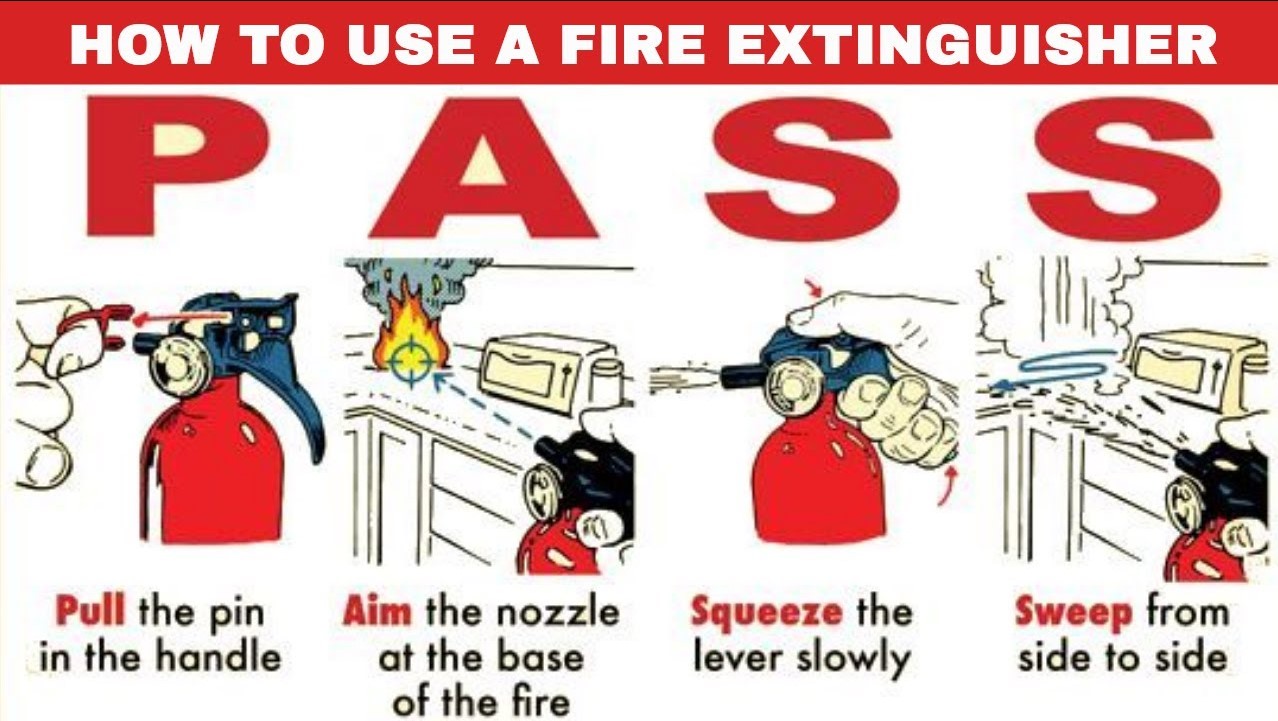
If you have ever stood in front of a fire extinguisher and wondered how to use it under pressure, the PASS acronym is the answer. PASS is the simple, widely taught, four-step method for operating a fire extinguisher correctly. It stands for Pull, Aim, Squeeze and Sweep — four easy-to-remember actions that anyone can recall in the stress of an emergency. This guide explains what each letter means, when it is actually safe to tackle a fire, and the second meaning of PASS used in professional firefighting.
What does PASS stand for?
PASS is most commonly known as a simple step-by-step method for using a fire extinguisher correctly. It stands for:
- P — Pull the safety pin
- A — Aim at the base of the fire
- S — Squeeze the handle
- S — Sweep from side to side
The acronym works because each step follows naturally from the last. Done in order, it takes a heavy, unfamiliar piece of equipment and turns it into four actions you can perform without hesitating — which is exactly what you need when seconds count.
The four steps explained
Here is what each letter of PASS means in practice, and how to carry out the step correctly.
P — Pull
Pull the safety pin out of the extinguisher's handle. The pin is a locking mechanism that prevents the extinguisher from discharging accidentally, so it must be removed before the unit will operate. Twisting the pin first can help break the small tamper seal. Once the pin is out, the extinguisher is ready to use.
A — Aim
Aim the nozzle, horn or hose at the base of the fire — not at the flames themselves. The fuel is at the base, so that is where the extinguishing agent needs to land to be effective. Stand a safe distance back — roughly 6 to 8 feet — both for your own safety and so the agent has room to spread across the burning material.
S — Squeeze
Squeeze the handle with steady, even pressure to release the agent. A controlled, continuous discharge gives you far more control than short, quick bursts and avoids wasting the extinguisher's limited contents. Releasing the handle stops the flow, which can be useful if you need to reposition.
S — Sweep
Sweep the nozzle from side to side across the base of the fire in a controlled motion. Keep sweeping until the flames disappear, then watch the area — a fire can reignite, so be ready to repeat the process on any hot spots until they have fully cooled.
| Letter | Action | How to do it |
|---|---|---|
| P | Pull | Pull the safety pin to unlock the extinguisher. |
| A | Aim | Aim low at the base of the fire, about 6–8 feet back. |
| S | Squeeze | Squeeze the handle with steady, even pressure. |
| S | Sweep | Sweep side to side across the base until the fire is out. |
When is it safe to tackle a fire?
Knowing the PASS method does not mean you should always use it. A fire extinguisher is only intended for small fires that are still in the early stages. Before you decide to fight a fire, make sure that:
- The fire is small and contained, and not spreading.
- You have a clear escape route behind you, so you are never working your way into a corner.
- You have the correct type of extinguisher for the fire.
- You feel confident using it.
If the fire is growing, producing a lot of smoke, or you are in any doubt, do not attempt to fight it. Raise the alarm, evacuate, and let the fire and rescue service deal with it. Your life is always worth more than property.
Even when a fire appears to be out, you should still call the emergency services — fires can reignite, and only the fire service can confirm an area is genuinely safe.
Using the right extinguisher
The PASS method tells you how to operate an extinguisher, but using the correct type for the fire is just as important. Using the wrong extinguisher — for example, water on an electrical or cooking-oil fire — can make the situation far more dangerous. Always check the colour-coded label and the class of fire the extinguisher is rated for before you act. You can read more in our guide to fire extinguisher types and their uses.
The other meaning of PASS
In professional firefighting, PASS has a second meaning. It can also stand for Personal Alert Safety System — a life-saving device worn by firefighters that sounds a loud alarm if the wearer becomes motionless or distressed for a set period. This helps colleagues locate a firefighter who may be trapped or incapacitated inside a building. For most workplaces and the public, however, PASS refers to the Pull–Aim–Squeeze–Sweep extinguisher method.
Why PASS matters in the workplace
Under the Regulatory Reform (Fire Safety) Order 2005, employers in England and Wales have a legal duty to take general fire precautions and ensure staff can act appropriately in an emergency. Knowing the PASS method is a core part of that competence. It is exactly the kind of practical skill covered in accredited fire safety and fire marshal training, so that designated staff know not just the four steps, but when — and when not — to use them.
Sources & references
- Fire Marshal Training — What Does PASS Stand For in Fire Safety?
- Regulatory Reform (Fire Safety) Order 2005 — general fire safety duties for the responsible person
Make sure your team can use an extinguisher safely when it counts.
Explore the Fire Warden / Fire Marshal Course →
Mark writes about workplace fire safety, compliance and accredited training for Fire Marshal Training, part of Online CPD Academy.