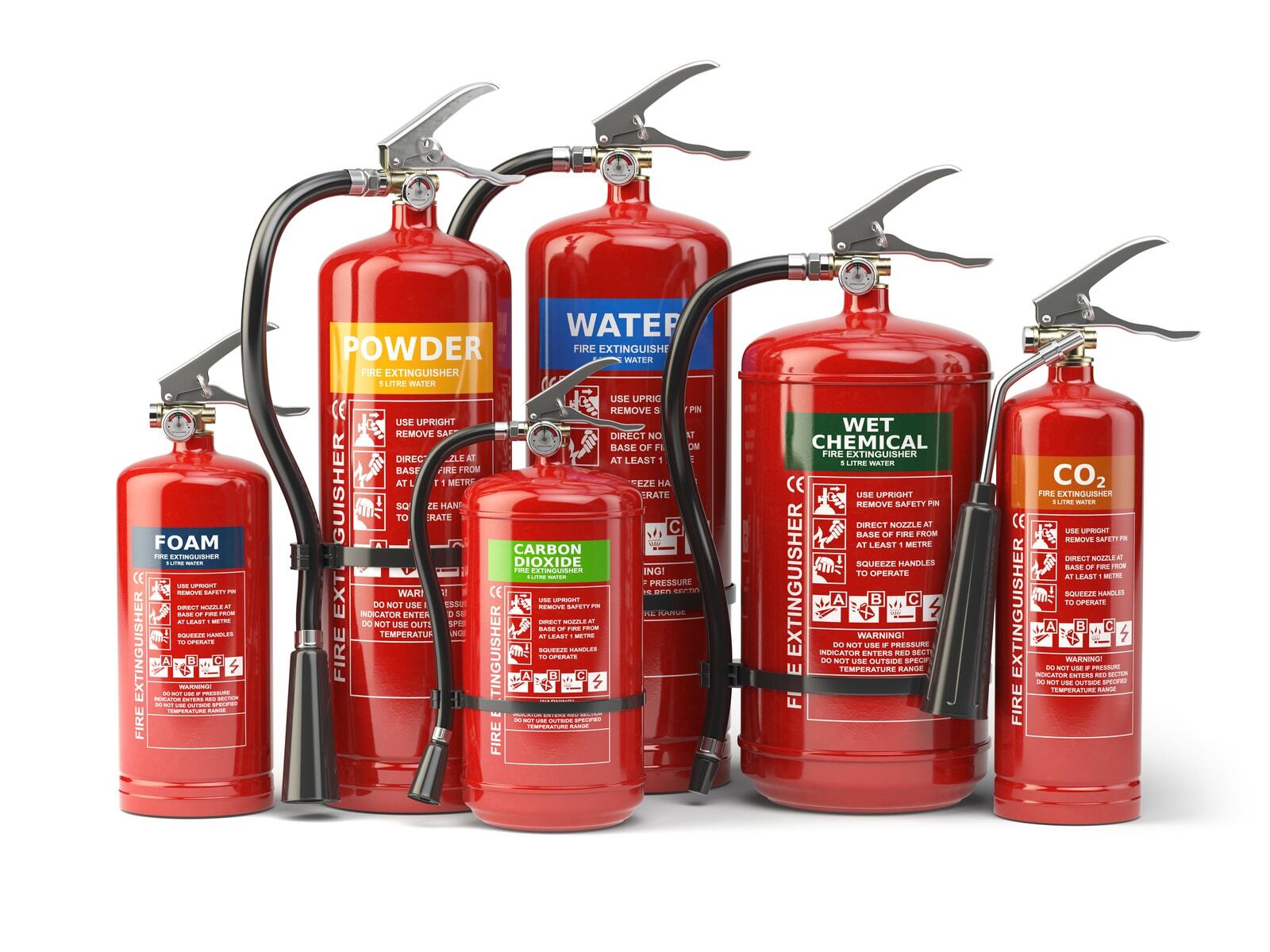
When a fire breaks out, having the right fire extinguisher can mean the difference between a minor incident and a catastrophe. There are five main types of fire extinguishers—water, foam, CO2, dry powder, and wet chemical—each designed to tackle specific classes of fires safely and effectively. Understanding which extinguisher to use is crucial because using the wrong type can be dangerous or even make the fire worse.
Fire safety regulations require businesses and many residential properties to have appropriate fire extinguishers based on the specific fire risks present. Different materials burn differently, creating distinct classes of fire that require specific extinguisher types to suppress them properly. From wood and paper fires to electrical equipment blazes and cooking oil incidents, each scenario demands a tailored approach.
Fire extinguisher colour codes help identify the right type quickly during emergencies, but knowing when and how to use each type goes beyond simply recognising colours. Proper selection, placement, and maintenance of fire extinguishers form the foundation of effective fire safety planning for any environment.
Fire Extinguisher Types - Short Answer:
- Use Water for wood, paper, and fabric (Class A).
- Choose Foam for solids and flammable liquids (Class A & B).
- Pick CO2 for electrical fires and some liquid fires.
- Use Dry Powder for multi-risk areas (Class A, B, C & electrical).
- Install Wet Chemical in kitchens for cooking oil fires (Class F)
Understanding Fire Classes and Their Risks
Fire classification systems categorise fires based on the burning material, with each class requiring specific extinguishing methods. The UK recognises six distinct fire classes plus electrical fires, each presenting unique hazards and suppression challenges.
Fire Classification Explained
The UK fire classification system divides fires into six main categories based on the burning material. This system ensures proper extinguisher selection and prevents dangerous misapplication of suppression methods.
Each class represents different combustion characteristics. Some fires involve solid materials that burn with glowing embers, whilst others involve liquids that spread rapidly across surfaces.
Class A fires involve ordinary combustible solids like wood, paper, and fabric. These materials typically leave ash residue and burn with visible flames and glowing embers.
Class B fires involve flammable liquids such as petrol, oil, and paint. These fires spread quickly across liquid surfaces and produce intense heat without leaving solid residue.
Class C fires involve flammable gases including methane, propane, and butane. These fires burn cleanly but can reignite easily if the gas source isn't controlled.
Classes of Fire and Examples
Class A fires occur in ordinary combustibles such as wood, paper, and textiles. Common examples include burning furniture, cardboard boxes, and clothing. These fires typically occur in offices, homes, and retail spaces.
Class B fires involve flammable liquids like petrol, diesel, and solvents. Paint thinner, turpentine, and alcohol also fall into this category. These fires commonly occur in garages, workshops, and industrial facilities.
Class C fires involve flammable gases such as natural gas, propane, and hydrogen. Industrial processes, commercial kitchens, and heating systems often present Class C fire risks.
Class D fires involve flammable metals including magnesium, aluminium powder, and potassium. These fires occur primarily in manufacturing environments and laboratories where reactive metals are processed.
Class F fires involve cooking oils and fats. Deep fat fryers, commercial kitchen equipment, and oil-filled cooking appliances create these fire risks.
Electrical fires involve live electrical equipment and require special consideration due to conductivity dangers.
Fire Risk Assessment Principles
Fire risk assessments identify potential fire hazards and evaluate the likelihood of ignition. Businesses and industries must ensure they have the right type of fire extinguisher for the risks present in their environment.
Risk assessment considers three key factors: ignition sources, fuel availability, and environmental conditions. Common ignition sources include electrical equipment, heating systems, and hot work activities.
Material storage affects fire classification requirements. Areas storing paper documents require Class A protection, whilst fuel storage areas need Class B capabilities.
Multiple fire classes often exist within single premises. Workshops may have Class A materials (wood), Class B liquids (paint), and Class C gases (welding equipment) in proximity.
Risk prioritisation focuses on high-probability scenarios first. Commercial kitchens prioritise Class F protection due to frequent oil heating, whilst server rooms emphasise electrical fire prevention.
Regular reassessment ensures fire protection remains appropriate as premises use changes over time.
Overview of Fire Extinguisher Types
Understanding fire extinguisher types and their colour codes helps people choose the correct equipment for different fire risks. Each extinguisher uses specific chemicals and works through different methods to tackle particular fire classes.
Key Differences Between Fire Extinguisher Types
Fire extinguishers work through four main methods: cooling, smothering, chemical interruption, and creating barriers.
Water extinguishers cool burning materials by absorbing heat energy.
Foam extinguishers create a blanket that cuts off oxygen supply whilst also cooling the fire.
CO2 extinguishers displace oxygen around the fire, effectively suffocating it. This makes them perfect for electrical equipment since they leave no residue behind.
Dry powder extinguishers interrupt the chemical reaction of burning and can tackle the widest range of fire types. However, the powder can damage sensitive electronic equipment.
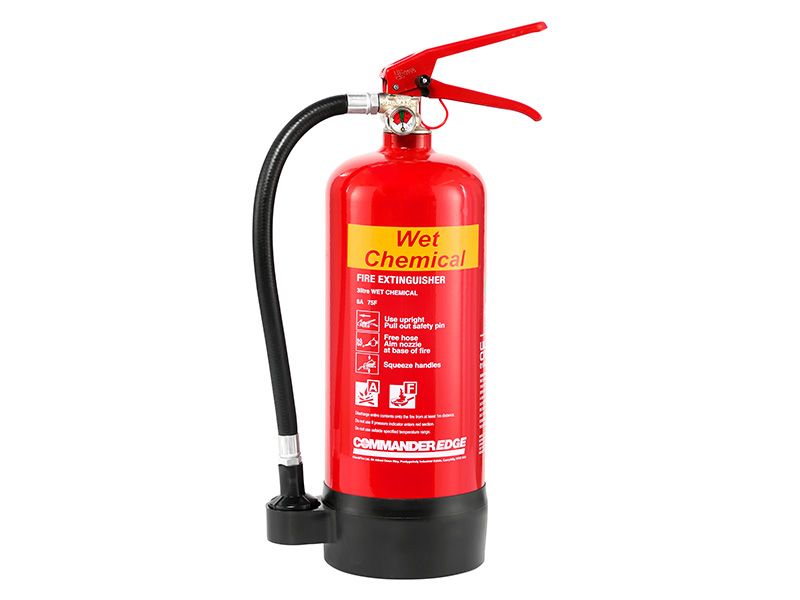
Wet chemical extinguishers create a cooling layer on top of burning oils and fats. This prevents re-ignition, making them essential for commercial kitchens.
Different extinguisher types tackle specific fire classes based on their chemical composition and discharge method. Water works on Class A fires but never on electrical or liquid fires. Foam handles both Class A and B fires effectively.
Colour Codes and Identification
UK fire extinguishers follow BS EN 3 standards for colour coding. At least 95% of each extinguisher must be signal red, with only 5% showing the identifying colour.
Water mist extinguishers typically have white labels and can tackle multiple fire types including electrical equipment up to 1000 volts.
Older extinguishers may have the entire body painted in the identifying colour. These remain legal to use until they reach the end of their service life or become defective.
Choosing the Right Extinguisher for the Risk
Risk assessment determines which types of fire extinguishers work best for specific environments. Offices need water or foam extinguishers for paper and furniture fires, plus CO2 extinguishers near electrical equipment.
Commercial kitchens require wet chemical extinguishers for cooking oil fires. Garages and workshops benefit from foam extinguishers that tackle both solid materials and flammable liquids.
Industrial environments often use dry powder extinguishers because they handle multiple fire classes. However, these create mess and can damage equipment.
Server rooms need CO2 extinguishers exclusively. These leave no residue and won't damage sensitive electronics. The extinguisher size must match the electrical voltage: 2kg minimum for standard equipment, 5kg for systems rated 415 volts or higher.
Multi-risk environments typically need several extinguisher types positioned strategically throughout the building.
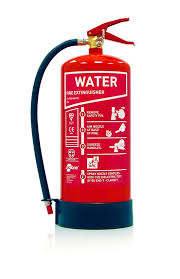
Water Fire Extinguishers
Water fire extinguishers are the most basic and widely used type of fire extinguisher, designed specifically to tackle Class A fires involving solid combustible materials. These extinguishers work through a cooling process and have clear limitations regarding the types of fires they can safely address.
How Water Extinguishers Work

Water extinguishers operate through a simple yet effective cooling mechanism. When discharged onto a fire, the water significantly reduces the temperature of burning materials below their ignition point.
The cooling effect happens in two ways. First, water absorbs large amounts of heat as it converts from liquid to steam. Second, the steam displaces oxygen around the fire, helping to smother the flames.
Water also soaks into surrounding materials, creating a protective barrier that prevents fire spread. This saturation effect is particularly important for materials like wood, paper, and fabric that can easily reignite.
Water fire extinguishers work by cooling fires and reducing temperatures below the ignition point. The process creates steam that displaces oxygen whilst simultaneously preventing re-ignition.
Most water extinguishers use pressurised air or carbon dioxide to propel the water through the nozzle. Some models include additives that improve the water's ability to penetrate materials or reduce surface tension.
Appropriate Uses and Limitations
Water extinguishers are designed exclusively for Class A fires involving solid organic materials. They work effectively on fires involving wood, paper, cloth, cardboard, and most plastics.
Appropriate uses include:
- Office buildings and schools
- Warehouses storing non-flammable materials
- Libraries and museums
- Residential properties
- Retail establishments
Water fire extinguishers are primarily used for Class A fires involving organic solid materials like wood, paper, and textiles.
Critical limitations exist for water extinguishers:
- Class B fires (flammable liquids) - water spreads burning liquids
- Class C fires (gases) - ineffective and potentially dangerous
- Electrical fires - risk of electrocution and equipment damage
- Class F fires (cooking oils) - causes dangerous splattering
Understanding water extinguisher exclusions is essential, as using them on flammable liquids, gases, or electrical equipment creates additional hazards.
Water extinguishers are easily identified by their bright red label in the UK. They typically come in 6-litre and 9-litre sizes, with fire ratings of 13A and 21A respectively.
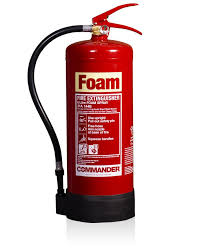
Foam Fire Extinguishers

Foam fire extinguishers work effectively on Class A and Class B fires by creating a barrier that smothers flames and prevents re-ignition. Modern foam extinguishers use AFFF technology and require proper application techniques for maximum effectiveness.
Foam Extinguishers in Class A and B Fires
Foam extinguishers are extremely effective on Class A fires involving paper, wood, and other solid materials. The foam penetrates absorbent materials whilst cooling the fire as water evaporates.
For Class A fires, foam works by:
- Smothering flames with a protective barrier
- Cooling burning materials through water content
- Penetrating into solid materials like fabric and wood
Class B fires involving flammable liquids respond particularly well to foam treatment. The foam forms a film that seals liquids away from oxygen in the air.
When used on flammable liquid fires, foam prevents re-ignition by creating an effective seal. This makes foam extinguishers ideal for petrol, oil, and paint fires.
Modern Aqueous Film Forming Foam (AFFF) extinguishers are lighter than water-only models whilst maintaining the same fire rating. A 6-litre foam extinguisher matches the 13A rating of a heavier 9kg water extinguisher.
Effective Application of Foam Extinguishers
Proper application technique ensures maximum effectiveness when using a foam fire extinguisher. The spray nozzle distributes foam evenly across the fire area for complete coverage.
For Class A fires, users should:
- Aim directly at the base of flames
- Sweep across the burning material
- Ensure complete coverage of hot spots
Class B liquid fires require different application methods. Users must avoid splashing burning liquids by directing foam gently onto the surface.
Foam extinguishers can be used near electrical equipment due to their non-conductive spray nozzles. Quality models pass the BS EN3 35,000V dielectric test, though direct application on live electrical equipment should be avoided.
The foam seals in harmful vapours under its protective film after extinguishing flames. This feature provides additional safety by preventing dangerous gas exposure during and after firefighting operations.
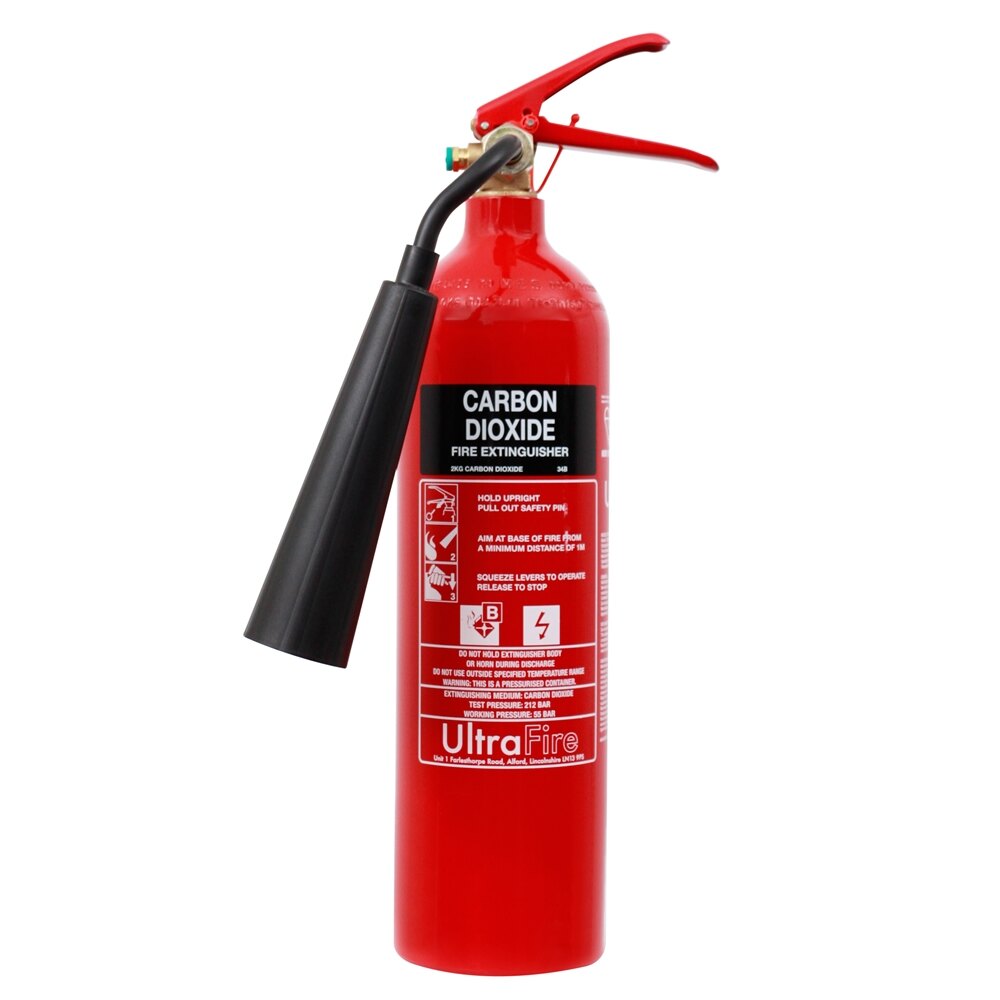
CO2 Fire Extinguishers

CO2 extinguishers use carbon dioxide gas to remove oxygen from fires and work best on electrical equipment and flammable liquids. They leave no residue after use, making them ideal for sensitive electronic equipment.
Properties and Operation of CO2 Extinguishers
CO2 extinguishers work by displacing oxygen around the fire, effectively suffocating it. The carbon dioxide gas is stored under pressure inside the cylinder.
When activated, CO2 expands rapidly as it exits the extinguisher. This expansion creates an extremely cold discharge that can reach temperatures below -78°C.
Key Properties:
- Non-conductive: Safe for use on live electrical equipment
- Residue-free: Leaves no harmful deposits on sensitive equipment
- Heavier than air: CO2 settles over the fire area
- Colourless and odourless: Does not contaminate the environment
The extinguisher features a distinctive hard horn nozzle that directs the gas flow. Users must never touch this horn during operation as it becomes dangerously cold and can cause frostbite.
CO2 extinguishers are identified by their black label and come in common sizes of 2kg and 5kg for most applications.
When to Use CO2 Extinguishers Safely
CO2 extinguishers are specifically designed for Class B fires involving flammable liquids such as petrol, paint, and solvents. They are also the only type safe for electrical fires because carbon dioxide does not conduct electricity.
Suitable for:
- Electrical panels and switchboards
- Computer equipment and servers
- Flammable liquid spills
- Laboratory equipment
Never use on:
- Class A fires (wood, paper, fabric) - risk of re-ignition
- Class F fires (cooking oils) - ineffective and dangerous
- Gas fires - cannot stop gas flow
Always ensure proper ventilation when using CO2 extinguishers indoors. The gas can displace oxygen in confined spaces, creating asphyxiation risks.
Turn off electrical power where possible before use. Aim at the base of the fire and sweep from side to side whilst maintaining a safe distance.
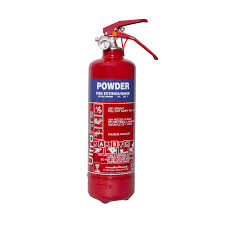
Dry Powder Fire Extinguishers

Dry powder fire extinguishers work on multiple fire classes using chemical powders that smother flames and disrupt combustion. These versatile extinguishers come in standard ABC types and specialist varieties for specific applications like flammable metals.
Types of Dry Powder Extinguishers
ABC dry powder extinguishers represent the most common type found in workplaces. They contain monoammonium phosphate powder that tackles Class A, B, and C fires effectively.
Standard ABC Types:
- MAP 50: Contains 50% monoammonium phosphate for general use
- MAP 90: Contains 90% monoammonium phosphate for high-risk environments
- B+ Powder: Specialised for Class B and C fires with enhanced effectiveness
Specialist powder extinguishers handle specific fire types that standard ABC units cannot manage. Class D extinguishers contain sodium chloride-based powder for flammable metals like magnesium and lithium.
Specialist Types:
- Class D powder: Designed specifically for burning metals
- Monnex powder: High-performance option for industrial applications
- Standard BC powder: Sodium bicarbonate-based for liquid and gas fires only
Suitable Fire Classes
Powder extinguishers tackle multiple fire classes depending on their powder type. ABC dry powder extinguishers handle the widest range of fires in most environments.
Fire Classes Covered:
ABC powder extinguishers work on electrical fires but can damage sensitive equipment. The powder creates a barrier that cuts off oxygen and prevents re-ignition.
Class D fires involving flammable metals require specialist powder extinguishers. Standard ABC powder proves ineffective and potentially dangerous on burning metals.
Precautions When Using Powder Extinguishers
Powder extinguishers create visibility problems in enclosed spaces and leave messy residue. Users must consider these limitations before deployment.
Key Safety Precautions:
- Never use in small enclosed rooms where visibility matters
- Avoid on chip pan fires (use wet chemical instead)
- Stand well back to prevent powder inhalation
- Ensure adequate ventilation during and after use
The powder residue damages electrical equipment and requires thorough cleaning afterwards. Server rooms and offices benefit from alternative extinguisher types to prevent equipment damage.
Breathing difficulties can occur when powder fills the air. Users should approach from upwind when possible and evacuate the area quickly after extinguishing fires indoors.
Wet Chemical Fire Extinguishers

Wet chemical fire extinguishers are specifically engineered for cooking oil and fat fires, using potassium-based solutions to create a cooling and smothering effect. These extinguishers also handle certain solid material fires beyond their primary kitchen applications.
Effective Use for Kitchen and Cooking Oil Fires
Wet chemical extinguishers are the only extinguishers recommended for cooking oil fires in commercial kitchens. They tackle Class F fires involving cooking oils, fats, lard, olive oil, butter, and vegetable oil.
The potassium-based chemical creates a fine mist when deployed. This mist reacts with burning oils to form a soapy film on the surface through saponification.
Key advantages include:
- Gentle application prevents oil splashing
- Cooling effect reduces fire temperature
- Soapy barrier blocks oxygen supply
Professional kitchens require these extinguishers by regulation. Restaurants, fish and chip shops, burger bars, and hotel kitchens must install them near deep fat fryers and cooking areas.
The extinguisher features a distinctive yellow label and extended hose with lance attachment. Users must maintain at least one metre distance from flames and spray in slow, circular motions.
Coverage Beyond Class F
Wet chemical extinguishers handle Class A fires involving flammable solids like paper, wood, and textiles. Some models receive certification for Class B fires containing flammable liquids such as petrol and diesel.
Important limitations exist:
- Cannot use on flammable gases (Class C fires)
- Not suitable for electrical fires
- May produce toxic fumes requiring ventilation
Standard sizes include 2-litre, 3-litre, and 6-litre options. The complete contents must be used to prevent re-ignition of cooking oil fires.
Commercial establishments typically pair wet chemical extinguishers with foam and CO2 extinguishers to cover all fire risks comprehensively. This combination ensures adequate protection across different fire classifications within the premises.
How to Use a Fire Extinguisher Safely
Proper fire extinguisher operation requires following the pass technique and maintaining safe distance from flames. Users must understand when to attempt firefighting versus evacuating immediately.
The PASS Technique
The PASS method provides four essential steps for operating any fire extinguisher effectively. This technique works across all extinguisher types and fire classes.
Pull the safety pin from the handle. This action breaks the tamper seal and activates the extinguisher mechanism.
Aim the nozzle or hose at the base of the flames, not at the top. Targeting the fuel source rather than visible flames ensures maximum effectiveness.
Squeeze the handle slowly and steadily. This releases the extinguishing agent in a controlled manner.
Sweep from side to side across the fire's base. Cover the entire burning area with the extinguishing agent using wide, deliberate movements.
Most extinguishers contain approximately 10 seconds of discharge time. Users should maintain steady pressure and sweeping motion throughout the process.
After extinguishing flames, watch the area for several minutes. Fires can reignite if hot materials remain. Back away slowly whilst monitoring for any rekindling.
Safety Precautions and Best Practice
Maintaining proper distance whilst using fire extinguishers prevents exposure to heat, flames, and toxic fumes. Stand at least six feet away from small fires.
Only attempt to fight fires smaller than the user's body size. Larger fires require professional emergency services and immediate evacuation.
Ensure a clear escape route remains available before approaching any fire. Never turn one's back on a fire area, even after apparent extinguishment.
Check wind direction outdoors to avoid blowing extinguishing agent away from flames or inhaling smoke. Position oneself upwind when possible.
Fire safety training teaches proper assessment of fire size and type before action. Training helps users recognise when evacuation takes priority over firefighting attempts.
Call emergency services immediately, even for small fires that appear controllable. Professional assessment ensures complete extinguishment and identifies potential hazards.
Fire Extinguisher Selection, Maintenance and Training
Proper fire extinguisher selection requires matching the device to specific fire risks in each environment. Regular maintenance ensures equipment remains operational when needed, whilst comprehensive training enables users to respond effectively during emergencies.
Selecting the Best Extinguisher for the Setting
Fire risk assessment forms the foundation of proper extinguisher selection. Different environments present unique hazards that require specific extinguisher types.
Office buildings typically need water extinguishers for Class A fires involving paper and furniture. CO2 extinguishers are essential near electrical equipment to handle electrical fires safely.
Commercial kitchens require wet chemical extinguishers specifically designed for Class F fires involving cooking oils and fats. These create a protective layer over burning oil to prevent re-ignition.
Industrial workshops benefit from dry powder extinguishers due to their versatility. These can tackle Class A, B, C fires and electrical equipment up to 1000 volts.
Coverage calculations help determine quantity requirements. One 13A extinguisher covers 200 square metres of floor area. A 450m² office would need three extinguishers (450 ÷ 200 = 2.25, rounded up).
Regular Inspection and Servicing Guidelines
Fire extinguisher servicing must be carried out annually to comply with regulations. Monthly visual inspections can be performed by designated staff members.
Monthly checks should verify the extinguisher remains in its correct location and hasn't been discharged or damaged. Pressure gauges must show correct readings, and safety seals should remain intact.
Professional servicing follows BS 5306-3 standards. Water, foam, and powder extinguishers require discharge and refilling every five years. CO2 extinguishers need refurbishment after ten years.
Service providers should hold certification from recognised trade bodies. Look for membership with the Fire Industry Association (FIA), BAFE, or similar organisations.
Proper maintenance ensures equipment reliability during emergencies. Neglected extinguishers may fail when needed most, putting lives and property at risk.
Importance of Fire Safety Training
Fire safety training educates participants on extinguisher types and proper usage techniques. Training covers fire classification, extinguisher selection, and safe operating procedures.
Basic training elements include understanding different fire classes and matching appropriate extinguisher types. Participants learn the PASS technique: Pull, Aim, Squeeze, and Sweep.
Professional training courses provide comprehensive coverage of fire fundamentals and practical application. These courses ensure staff can respond confidently during actual emergencies.
Training reduces panic and improves response times during fire incidents. Knowledgeable staff can assess situations quickly and select appropriate extinguishers.
Regular refresher sessions maintain competency levels. Fire safety skills deteriorate without practice, making ongoing training essential for workplace safety programmes.
Frequently Asked Questions
Property owners often need clarification on fire class systems, colour coding standards, and maintenance schedules. Understanding placement requirements and selection criteria helps ensure compliance with UK regulations.
What are the different classes of fire extinguishers and their uses?
The UK recognises six distinct fire classes, each requiring specific extinguisher types. Class A fires involve combustible materials including paper, fabric, wood, and other flammable solids.
Class B fires are caused by flammable liquids such as paint, turpentine, petrol, and petroleum products. These commonly occur in garages, workshops, and industrial settings.
Class C fires involve flammable gases including methane, butane, hydrogen, and liquid petroleum gas. Commercial kitchens and industrial facilities frequently encounter these risks.
Class D fires are caused by combustible metals including potassium, aluminium, magnesium, and other reactive metals. Specialist manufacturing environments primarily face these hazards.
Class F fires involve cooking oils and fats, such as chip-pan fires. These are specific to commercial and domestic kitchens.
Electrical fires involve live electrical equipment and require special consideration. Water-based extinguishers can be dangerous if used incorrectly on electrical fires.
How do I choose the appropriate fire extinguisher for my premises?
The selection process begins with identifying the primary fire risks present in the building. Office environments typically require water or foam extinguishers for Class A fires and CO2 extinguishers near electrical equipment.
Commercial kitchens need wet chemical extinguishers for Class F fires involving cooking oils. Industrial workshops benefit from dry powder extinguishers due to their versatility across multiple fire classes.
Mixed-risk environments should consider foam extinguishers as they tackle both Class A and Class B fires effectively. Garage forecourts exemplify this need, handling both paper fires and petrol spills.
Professional fire risk assessments provide tailored recommendations based on specific circumstances. These evaluations consider building layout, occupancy type, and unique hazards present.
Can you explain the colour-coding system used on fire extinguishers in the UK?
UK fire extinguishers must comply with BS EN 3 standards, requiring at least 95% of the body to be signal red. The remaining 5% displays a colour-coded zone indicating the extinguisher contents.
Water extinguishers remain entirely signal red without additional colour coding. Foam extinguishers display cream labels, bands, or circles on their red bodies.
Dry powder extinguishers feature blue identification zones, whilst CO2 extinguishers use black markings. Wet chemical extinguishers are identified by yellow colour coding.
Older extinguishers with entirely coloured bodies remain legal and functional. These only require replacement when defective or at the end of their serviceable life.
Are there specific maintenance requirements for different types of fire extinguishers?
All fire extinguishers must be serviced annually to comply with Regulatory Reform (Fire Safety) Order 2005 requirements. Professional servicing must follow BS5306 standards.
Water, foam, and powder extinguishers require discharge and refilling every five years. CO2 extinguishers need refurbishment after ten years of service.
Monthly visual inspections check for correct positioning, damage, pressure readings, and intact safety seals. These inspections can be performed by designated staff members rather than professionals.
Kitemarked P50 service-free extinguishers only require refurbishment after ten years. They need monthly visual inspections and recorded annual inspections by owners.
What should be considered when placing fire extinguishers in a commercial setting?
UK regulations specify maximum travel distances of 30 metres for Class A and C fire extinguishers. Class B and F fire extinguishers must be within 10 metres of potential users.
Strategic positioning near exits encourages movement away from danger rather than towards it. Specialist extinguishers should be within easy reach but not too close to specific hazards.
Small extinguishers weighing up to 4kg should mount with handles approximately 1.5 metres from the floor. Heavier extinguishers require mounting at about 1 metre height.
Kitchen extinguishers need positioning close to cooking apparatus but away enough for safe access. Server room CO2 extinguishers should be placed outside the room for safe retrieval.
How often should fire extinguishers be inspected or replaced?
Monthly visual inspections ensure extinguishers remain in correct locations without discharge, tampering, or damage. These checks verify proper pressure readings and intact safety mechanisms.
Annual professional servicing maintains compliance with legal requirements and manufacturer specifications. Qualified technicians perform comprehensive testing and maintenance procedures.
Replacement occurs when extinguishers reach the end of their serviceable life or become defective. Water, foam, and powder types typically last five years before requiring refurbishment.
Fire extinguishers need immediate replacement after any use, even partial discharge. The pressurised system becomes compromised once activated, reducing effectiveness in future emergencies.
Looking for fire marshal training? We offer a range of online RoSPA approve courses.

%201.png)